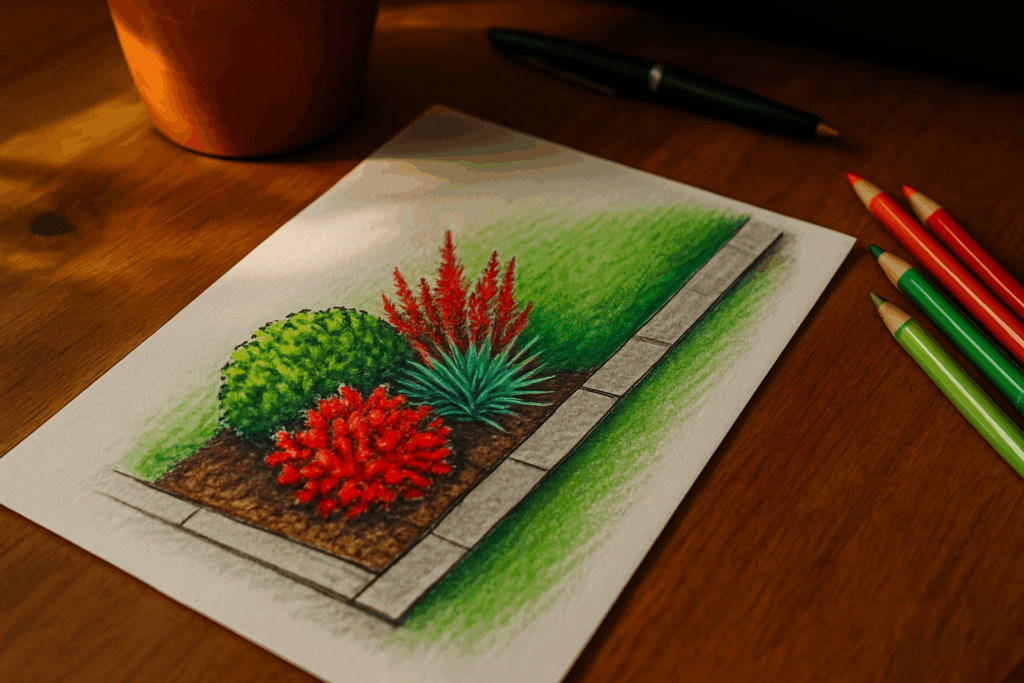
Going Beyond Green: Why Borders Matter
Garden borders do a lot more than define space they define style. A sharp border isn’t just a clean edge; it’s a visual cue that tells the eye where to go and what to absorb. Whether you’re working with sprawling beds or tight courtyard corners, borders create structure. Without them, even the most lush garden can feel like it’s floating in space.
Color matters, and fast. Well chosen combos like deep purples against lime greens, or fiery oranges anchored by charcoal mulch can stop people in their tracks. Borders are where you get to dial up contrast, punch in personality, and break up the green monotony of shrub heavy designs. This isn’t about making it loud it’s about crafting moments that stand out.
Think of bold borders as the framework that lifts your garden from “nice” to something with real weight. Done right, they pull the entire landscape together, grounding even wild or whimsical elements with deliberate design. These lines don’t just outline your yard they give it presence.
Plants That Pack a Visual Punch
When you want color that doesn’t flinch with summer heat or shifting light, go with the classics: marigolds, salvias, coleus, and zinnias. These aren’t just dependable they’re loud, cheerful, and unapologetic. Great for borders that need backbone and blaze.
But it’s not just about the bloom count. Layering is the secret move. Think vertical diversity low growers like sweet alyssum or moss rose up front, mid tier zinnias or salvias in the center, and something taller like ornamental grasses or cosmos standing guard in the back. Texture also adds punch: fuzzy coleus leaves, spiked salvias, soft zinnias. Mixing bloom times? That keeps your border in motion from early spring to first frost.
Don’t ignore the greens. Bold foliage is the unsung hero of a striking border. Chartreuse lights things up. Burgundy grounds the palette. Variegated leaves green streaked with cream or white break the monotony and bounce light. Combine these with your bloomers and suddenly your border doesn’t just show up it stays unforgettable.
Creative Color Pairings That Work
If your garden border feels flat, color might be the fix done right, it’s a shortcut to visual impact. One approach: contrast that snaps. Magenta and orange. Purple and lime. These combos punch past the usual and work best when you let one lead and the other play support. Think bold orange marigolds alongside deep magenta celosia, or lime green heuchera touched by deep purple salvia.
On the quieter side, soft pastels and silvery greens bring a calming vibe. Plants like dusty miller, lavender, light pink cosmos, and pale blue salvia weave together into understated elegance. These combos don’t shout, but they make people stop and look twice.
Behind every great pairing is color theory. Opposites on the color wheel complementary colors create tension and pop. Analogous colors, those grouped close on the wheel, feel more harmonious. Use high contrast combos to energize tight spaces, and soothing schemes to calm down the view from your patio. Either way, let your borders be more than filler they’re how your garden speaks.
Mixing Styles for Maximum Impact

The best garden borders in 2024 don’t pick sides they mix them. There’s power in contrast, especially when naturalistic planting meets clean, architectural edges. Think wildflower chaos held in place by crisp brick lines. Or loose grasses brushing against a steel border. The balance makes both elements stand out.
You can keep it playful leaning into a cottagecore vibe, bold color themes, or quirky shapes. Just know when to dial it back. Too much whimsy with no structure feels messy instead of magical. On the flip side, a fully polished layout risks looking sterile. A good rule: lead with personality, finish with restraint.
Explore more playful twists and fresh theme ideas in this resource: whimsical garden ideas.
Basics That Deserve More Credit
Let’s start with mulch. Most people toss down whatever’s on sale and move on. But mulch color affects the entire vibe of your garden. Deep black mulch makes greens pop and gives a modern edge. Reddish mulch brings warmth and plays well with terra cotta and desert tones. Even natural brown comes in shades some cool, some warm and the difference is more than subtle. It’s mood setting.
Then there are the groundcovers. Think low, lush, and colorful: creeping thyme with its soft purple blooms, ajuga with its dark, almost inky leaves, mondo grass for texture and unexpected drama. These little guys don’t just fill space they create contrast and make your borders feel finished.
And if you want to take it further, paint your edging materials. Stones, bricks, salvaged wood give them a treatment to either blend in or stand out. A matte black border looks sharp and modern. A teal wash on bricks? Unexpected, but striking. These edge details might be the smallest part of your layout, but they carry visual weight. Use them with intention.
Tips for Year Round Boldness
Color doesn’t clock out in winter it just changes form. Smart gardeners know to choose plants that hold their ground in the off season. Evergreen shrubs make a reliable backbone, and trees with striking bark (like dogwood or birch) bring texture and color when everything else fades. The key is layering elements that don’t disappear when the frost hits.
Annuals? Rotate them like clockwork. Spring and summer are your time to flash bright blooms. Come fall, switch gears with hardy alternatives think ornamental kale or violas. But don’t uproot everything. Keep your heavyweight perennials in place. They anchor the design and reduce work over time.
Winter isn’t an excuse for dullness. Add bold containers or offbeat ornaments a rusted metal sculpture, painted urns, or anything with structure. They create visual interest even when blooms are scarce. A little unpredictability goes a long way.
Want more inspiration to keep things fun and fresh? Check out these whimsical garden ideas.
Thinking Outside the (Garden) Box
Not every garden border needs to run in a straight line. Spirals, waves, and patchwork style planting beds add motion and personality, pulling visitors into the space with a sense of curiosity. These shapes break up monotonous layouts and give your garden a signature edge literally.
Here’s another unexpected touch: borrowing colors directly from your home’s exterior. Got navy shutters or a red brick wall? Consider introducing plants with deep blue blooms or burgundy foliage to echo that tone and tie the space together visually. This kind of cohesion makes the entire landscape feel intentional, grounded, and more harmonious.
One last principle to lock in: keep the eye moving, but not overwhelmed. Use curves and color shifts to lead people through the space, then make them stop and take it in. A bench tucked into a border, a tall ornamental grass catching the light, or a bright ceramic pot can act as natural punctuation marks in your garden’s story.
 Dorothy Hedricksins is the kind of writer who genuinely cannot publish something without checking it twice. Maybe three times. They came to landscaping design ideas through years of hands-on work rather than theory, which means the things they writes about — Landscaping Design Ideas, Outdoor Living Solutions, Creative Inspirations, among other areas — are things they has actually tested, questioned, and revised opinions on more than once.
That shows in the work. Dorothy's pieces tend to go a level deeper than most. Not in a way that becomes unreadable, but in a way that makes you realize you'd been missing something important. They has a habit of finding the detail that everybody else glosses over and making it the center of the story — which sounds simple, but takes a rare combination of curiosity and patience to pull off consistently. The writing never feels rushed. It feels like someone who sat with the subject long enough to actually understand it.
Outside of specific topics, what Dorothy cares about most is whether the reader walks away with something useful. Not impressed. Not entertained. Useful. That's a harder bar to clear than it sounds, and they clears it more often than not — which is why readers tend to remember Dorothy's articles long after they've forgotten the headline.
Dorothy Hedricksins is the kind of writer who genuinely cannot publish something without checking it twice. Maybe three times. They came to landscaping design ideas through years of hands-on work rather than theory, which means the things they writes about — Landscaping Design Ideas, Outdoor Living Solutions, Creative Inspirations, among other areas — are things they has actually tested, questioned, and revised opinions on more than once.
That shows in the work. Dorothy's pieces tend to go a level deeper than most. Not in a way that becomes unreadable, but in a way that makes you realize you'd been missing something important. They has a habit of finding the detail that everybody else glosses over and making it the center of the story — which sounds simple, but takes a rare combination of curiosity and patience to pull off consistently. The writing never feels rushed. It feels like someone who sat with the subject long enough to actually understand it.
Outside of specific topics, what Dorothy cares about most is whether the reader walks away with something useful. Not impressed. Not entertained. Useful. That's a harder bar to clear than it sounds, and they clears it more often than not — which is why readers tend to remember Dorothy's articles long after they've forgotten the headline.