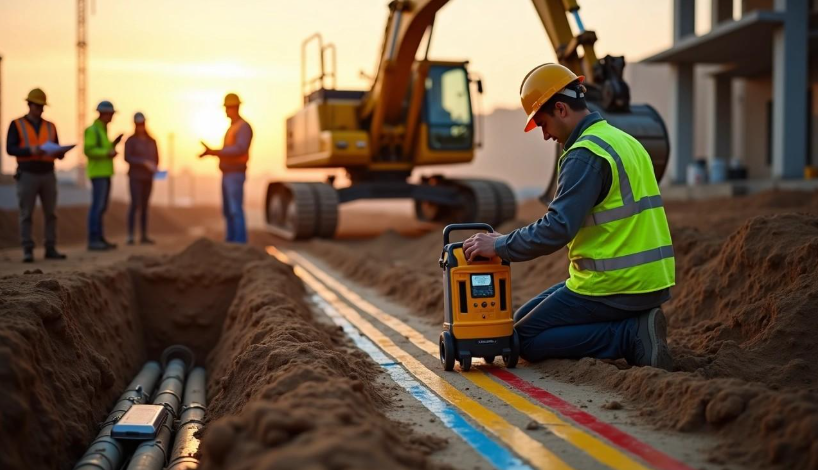
Hidden dangers lie beneath nearly every construction site. Beneath the ground is a complex web of gas lines, electrical cables, water pipes, and communication networks that support daily life. When excavation begins without proper underground mapping, the risk of striking these utilities increases significantly, turning routine projects into serious safety hazards.
Hitting an underground line can trigger far more than a simple repair. Damaged utilities can shut down essential services, delay construction timelines, and create dangerous conditions that lead to injuries, property damage, and legal complications. This is why reliable private utility locating services play such a critical role in protecting workers, infrastructure, and project budgets.
This article explores why underground utility detection matters, how professional locating teams operate, and the key benefits they bring to construction projects. It also examines the challenges involved in utility locating and how experienced specialists address them to keep projects safe, efficient, and on track.
Why Construction Projects Face Hidden Underground Risks
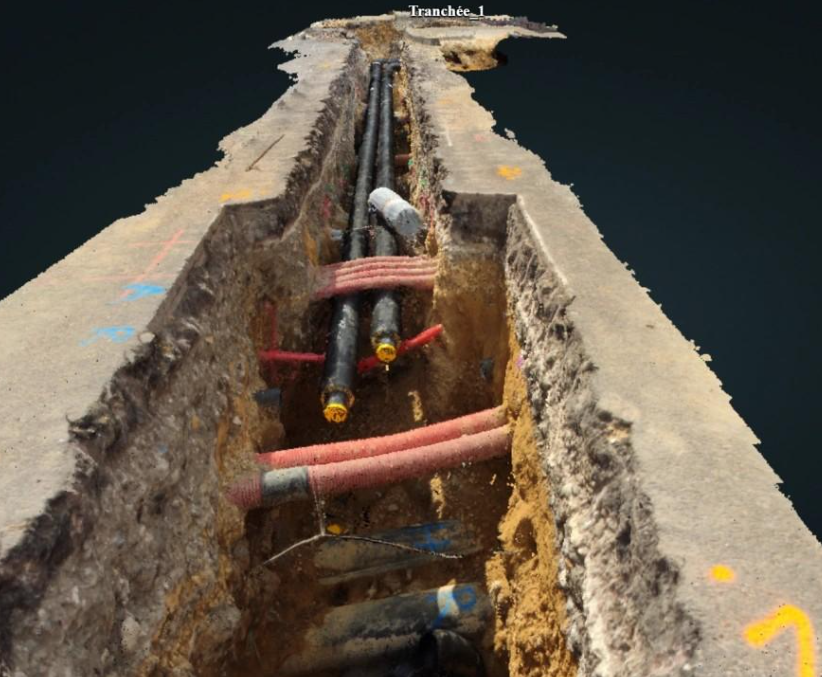
A complex network of vital infrastructure lies beneath our cities and construction sites. This invisible maze powers modern life. Construction projects must carefully navigate these underground utilities because hitting them can turn routine excavation into a costly disaster.
Common types of underground utilities: gas, water, electric, telecom
Several critical systems serve as lifelines for communities in the underground utility network. Water supply lines bring clean drinking water to homes and businesses. The sewer system’s pipes carry wastewater away for treatment and ensure public health and sanitation across neighborhoods.
Natural gas pipelines deliver fuel needed for heating, cooking, and power generation. These lines run under high pressure, and even small damage can create dangerous conditions.
The electrical infrastructure has underground cables and subterranean transformers that control and distribute power to users. These buried components carry dangerous voltage levels that can cause electrocution if disturbed.
Telecommunications utilities have become crucial to daily life. The network has fiber optic cables, internet lines, and phone services that enable emergency communications and everyday connectivity.
Consequences of accidental utility strikes during excavation
Hitting underground utilities creates problems well beyond simple repairs. A utility strike happens every 62 seconds in the United States. This results in over 2,000 injuries and 400 deaths each year. The U.S. sees between 400,000 and 800,000 utility strikes annually.
The financial toll is severe. Direct repair costs average $4,000 per incident, but the real effect runs deeper. Studies show that each dollar of direct damage leads to $29 in extra costs from service disruptions, project delays, and legal problems.
A damaged gas line can cause explosions and fires. Broken electrical cables pose electrocution risks. Water line breaks lead to flooding and property damage. Cut telecommunication cables disrupt essential services for thousands of people.
Construction projects can stop for days or weeks after utility strikes. This creates a domino effect on connected projects and operations. Construction firms suffer reputation damage, face regulatory penalties, and risk lawsuits that can hurt future business opportunities.
How Utility Locating Services Prevent Excavation Hazards
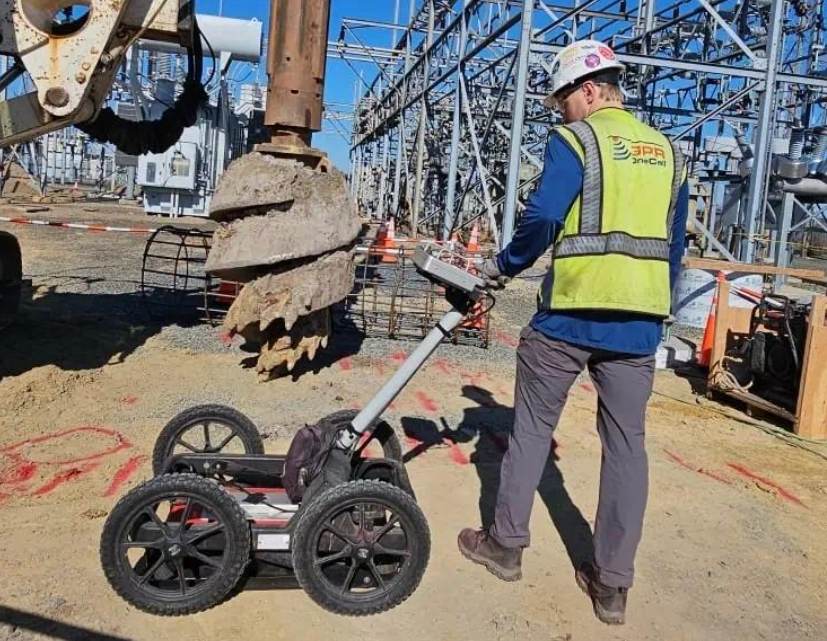
Professional utility locating services use advanced technologies to prevent underground utility strikes. Technicians use specialized tools to map underground structures before excavation starts. This approach eliminates guesswork and reduces risk.
Ground-penetrating radar (GPR) for subsurface imaging
GPR technology creates detailed images of buried objects by using high-frequency radio waves that penetrate the ground. The waves bounce back to the receiver when they hit different materials underground. This generates cross-sectional views of subsurface features. GPR can detect both metallic and non-metallic objects, which makes it a great way to get information about plastic pipes, concrete conduits, and voids.
Soil conditions affect GPR’s ability to work. Sandy soils provide the best performance while clay or saline soils reduce its effectiveness. GPR systems typically run at frequencies between 25 to 1,500 MHz. The 200–400 MHz range works best for utility investigations because it delivers high-resolution data for objects buried 1 to 6 feet deep.
On complex commercial and infrastructure projects, construction teams often work with experienced firms like BHUG, which provides specialized Las Vegas utility locating services that use GPR to accurately map underground utilities and support safer excavation planning.
Electromagnetic locators for conductive utilities
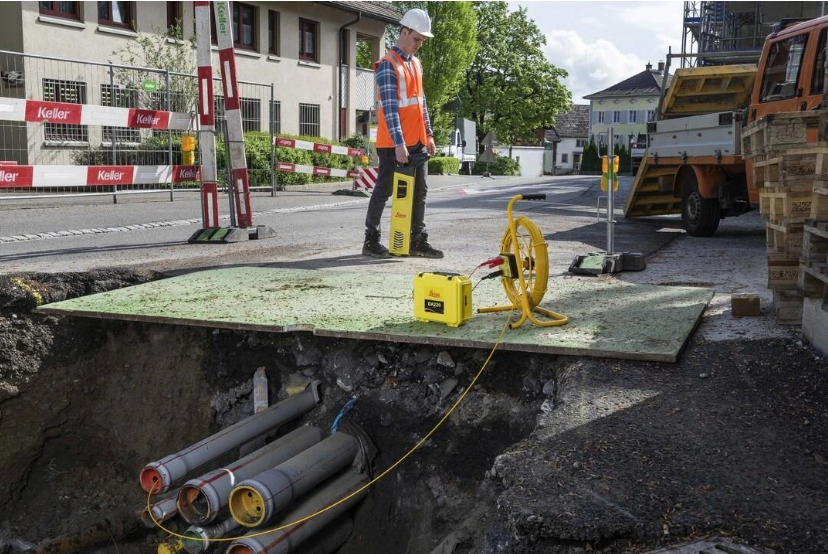
Electromagnetic utility locating detects signals from conductive materials. This method identifies the electromagnetic field that forms when alternating current flows through metallic pipes or cables. Technicians detect passive signals naturally present in power cables or add active signals through direct connection or induction.
Locators use multiple techniques to get the best results:
- Direct connection: Attaches transmitter directly to utility access point
- Ring clamp induction: Uses a clamp around pipes without disconnecting service
- Induction: Places transmitter above suspected utility when no access point exists
Vacuum excavation for non-destructive verification
Vacuum excavation confirms utility locations visually through “daylighting” after the original detection. This technique loosens soil with pressurized air or water while hoovering up debris into a containment tank.
The process creates small inspection holes instead of traditional trenches, which makes it precise and minimally invasive. Operators can see the infrastructure physically before major excavation starts, which virtually eliminates accidental utility strikes. This method works especially when you have congested urban areas where multiple utilities run close together.
Key Benefits of Utility Locating for Project Success
Smart investments in utility locating bring real financial benefits to construction projects. Studies show that each dollar invested in subsurface utility engineering saves $4.62 in related costs. These numbers show how small investments now can prevent huge expenses down the road.
Reduced project delays and cost overruns
Construction teams with detailed utility location data face 60-75% fewer change orders than those using outdated information. A single utility strike can cost $56,000 and halt work for 8-12 weeks. The construction industry loses $62 billion each year to repair damage to public utilities. Accurate utility maps help contractors create safer and smarter excavation plans that cut down on wasted work and labor costs.
Improved worker and public safety
Hitting underground utilities by accident creates serious dangers. These include gas leaks that lead to explosions, cut electrical lines causing electrocution, and broken water mains that result in flooding. Construction teams can avoid these life-threatening situations by finding subsurface utilities ahead of time. On top of that, following utility locating rules keeps teams in line with safety protocols and protects workers and nearby communities.
Minimized service disruptions to communities
Utility strikes reach far beyond the construction site and disrupt entire neighborhoods. Damaged sewer lines can poison water supplies, while cut communication cables stop emergency services. Most of these critical infrastructure problems can be prevented through accurate locating. People living near construction sites can count on reliable utility access throughout the project, so their quality of life stays intact despite nearby construction work.
Challenges in Utility Locating and How Experts Solve Them
Even with modern tools and technology, utility locating still comes with real-world obstacles. Below are some of the most common challenges professionals face today, along with how experts work to manage and overcome them.
- Inaccurate or outdated utility records
Traditional utility maps often fail to reflect what is actually underground. Studies have shown that subsurface utility engineering investigations uncover significantly more utilities than existing records indicate, with many mapped lines off by several feet or more. - Unmarked or abandoned lines
One of the most serious risks comes from utilities that were never properly documented or were left behind after old projects. Any unidentified line must be treated as active until confirmed otherwise, which can halt construction and delay projects. - Soil conditions affecting detection accuracy
Ground composition plays a major role in how well locating equipment performs. Wet clay soils can distort signals, while frozen ground limits equipment penetration. Extremely dry conditions can also interfere with conductivity. - Collaborative data sharing with utility providers
In the past, utility data was often fragmented between different companies and agencies. Today, coordinated data initiatives and shared platforms allow for better access to up-to-date records. - Ongoing technician training and certification
Utility locating relies heavily on human expertise. Certified training programs teach technicians how to operate equipment, interpret signals, troubleshoot issues, and document findings correctly. Ongoing education and hands-on experience ensure professionals stay current with evolving technology and industry standards.
What Lies Beneath Determines What Happens Above
Construction success depends on what cannot be seen. Streets, buildings, and infrastructure may define a city’s skyline, but safety, progress, and reliability depend on the hidden systems running underneath. Each pipe, cable, and conduit carries essential services that communities rely on every day. When those systems are ignored or poorly identified, the cost is measured not only in money, but in safety, time, and public trust.
Professional utility locating turns uncertainty into clarity. It allows project teams to plan with confidence, protect workers, and preserve the vital networks that support daily life. Instead of reacting to disasters, construction teams can prevent them. Instead of delays and emergency repairs, projects move forward with control and precision.
As cities grow and underground infrastructure becomes more crowded, careful detection becomes just as important as skilled building. Safe development no longer starts at ground level. It starts with knowledge of what lies beneath, and the commitment to protect it before any excavation begins.
 Carmena Coyleris has opinions about creative inspirations. Informed ones, backed by real experience — but opinions nonetheless, and they doesn't try to disguise them as neutral observation. They thinks a lot of what gets written about Creative Inspirations, Home and Garden Trends, Outdoor Living Solutions is either too cautious to be useful or too confident to be credible, and they's work tends to sit deliberately in the space between those two failure modes.
Reading Carmena's pieces, you get the sense of someone who has thought about this stuff seriously and arrived at actual conclusions — not just collected a range of perspectives and declined to pick one. That can be uncomfortable when they lands on something you disagree with. It's also why the writing is worth engaging with. Carmena isn't interested in telling people what they want to hear. They is interested in telling them what they actually thinks, with enough reasoning behind it that you can push back if you want to. That kind of intellectual honesty is rarer than it should be.
What Carmena is best at is the moment when a familiar topic reveals something unexpected — when the conventional wisdom turns out to be slightly off, or when a small shift in framing changes everything. They finds those moments consistently, which is why they's work tends to generate real discussion rather than just passive agreement.
Carmena Coyleris has opinions about creative inspirations. Informed ones, backed by real experience — but opinions nonetheless, and they doesn't try to disguise them as neutral observation. They thinks a lot of what gets written about Creative Inspirations, Home and Garden Trends, Outdoor Living Solutions is either too cautious to be useful or too confident to be credible, and they's work tends to sit deliberately in the space between those two failure modes.
Reading Carmena's pieces, you get the sense of someone who has thought about this stuff seriously and arrived at actual conclusions — not just collected a range of perspectives and declined to pick one. That can be uncomfortable when they lands on something you disagree with. It's also why the writing is worth engaging with. Carmena isn't interested in telling people what they want to hear. They is interested in telling them what they actually thinks, with enough reasoning behind it that you can push back if you want to. That kind of intellectual honesty is rarer than it should be.
What Carmena is best at is the moment when a familiar topic reveals something unexpected — when the conventional wisdom turns out to be slightly off, or when a small shift in framing changes everything. They finds those moments consistently, which is why they's work tends to generate real discussion rather than just passive agreement.