Make Every Square Foot Count
When your yard’s got more limits than lawn, designing with purpose matters. Every inch should pull double duty. Want a spot to relax, eat, and maybe grow some basil? Good plan for it. Define zones for dining, lounging, and gardening so each area feels intentional, not crowded. Skip the randomness. A foldable bistro set, a compact lounge chair, and a raised planter can turn even a patch of concrete into a usable backyard.
For more depth literally layer your space. Vertical touches like wall mounted planters or trellises draw the eye upward, while horizontal lines (like deck planks or low benches) ground the layout and stretch it visually. Stack and spread to trick the view into feeling bigger.
And here’s the non negotiable: keep it clean. Visual clutter shrinks space fast. Stick to a few strong pieces, choose muted tones, and give everything some breathing room. Minimalist doesn’t mean empty it just means focused. When every item serves a purpose, suddenly your small yard feels smart, not small.
Tiered Planters for Vertical Greenery
Don’t have much ground to work with? Go up. Tiered planters whether stackable pots or mounted wall units are one of the most space smart moves you can make in a small yard. They free up precious square footage while letting you pack in a surprising amount of greenery. Herbs, succulents, and flowers thrive in vertical zones, and with the right mix, you can turn a blank fence into a living backdrop.
Beyond saving space, these setups bring instant texture and height to a flat layout. They help layer the landscape, creating visual rhythm without crowding the ground. Wall mounted planters work great near seating areas or outdoor kitchens, while multi tiered stands can slot into forgotten corners. It’s an easy win: more plants, more impact, zero sprawl.
Built in Benches with Storage
Make your seating work harder with built in benches that offer both comfort and function. In a small yard, dual purpose features like these maximize space without compromising on style.
Why It Works
Space efficient: Combines seating and storage in a single footprint
Versatile: Customizable to fit corners, patios, or even raised garden beds
Clean design: Eliminates the need for added furniture or separate storage units
What Can You Store?
Gardening tools and gloves
Outdoor cushions and seasonal décor
Kids’ outdoor toys or games
Design Tips
Use weather resistant materials like teak or composite for durability
Add lift up lids or side access panels for easy opening
Pair with neutral outdoor cushions to match your design theme
Functional and sleek, built in benches help keep your yard organized while creating a natural gathering spot.
Multi Use Pathways
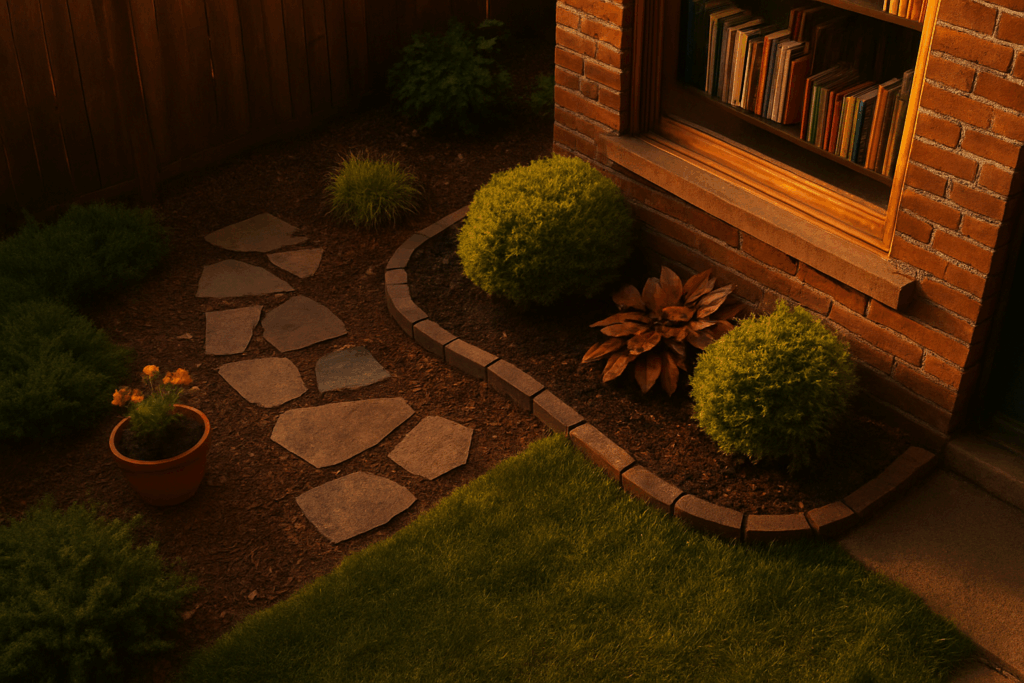
In a small yard, every element needs to do double duty and that includes your walkways. Stepping stone paths aren’t just for getting from point A to B; they can anchor the entire look of your outdoor space. Pick materials that balance form and function flagstone, aged brick, or even pavers set in gravel.
To avoid a too polished or rigid effect, soften the borders with crushed stone or creeping groundcovers like thyme or moss. The goal here isn’t just neatness it’s movement and flow. Interweaving the path with low plants blurs edges and makes the space feel less boxed in.
Design these paths to guide the eye as much as the feet. Whether winding or clean lined, they create visual rhythm. Think of them as outdoor breadcrumbs with style.
Need more inspiration? Check out these hardscape landscaping tips for fresh ideas.
Use Mirrors to Expand Space
Mirrors aren’t just for bathrooms or hallways. In a small yard, an outdoor safe mirror can pull double duty amplifying natural light and giving the impression that your space continues beyond its actual borders. It’s a trick borrowed from interior design, but it works just as well outside.
Position a weather resistant mirror where it can catch sunlight and bounce it around shaded corners. Aim it toward plants or a focal point, like a feature wall or fountain, to double the green impact. Just be smart about angles unless you want to blind your guests at noon.
It’s simple, low maintenance, and surprisingly effective. A well placed mirror can make even the tightest courtyard feel a bit more airy and alive.
Hang a Garden Instead

Think vertical. When ground space is tight, the walls and ceilings of your yard become prime real estate. Hanging baskets, mounted planters, and trellises let you add lush greenery without giving up precious patio or walking space.
Wall mounted boxes work great for herbs, small flowers, or even some veggies. Trellises pull double duty growing vines while acting as a green privacy screen. Hanging baskets? Hang them from pergolas, eaves, or hooks to inject color right at eye level.
It’s simple: the more you grow up, the less you take up. This is how small yards stay functional and full of life.
Hardscape With Purpose
In small yards, every square foot matters. That’s where hardscape pulls its weight. Features like pavers, decking, and retaining walls don’t just look sharp they give your space clear structure. Want to carve out a dining nook, build up a garden bed, or keep things level on a slope? Hardscape has your back.
Pavers form walkways and patios that visually and physically divide your space, while decking can lift an area for better drainage or create contrast in texture. Retaining walls do more than hold back soil they help define edges, create tiered zones, and add vertical interest without clutter.
Think of hardscape details as the framework of your design. Get them right, and the soft stuff plants, furniture, lighting falls into place naturally. For a deeper look, check out these actionable hardscape landscaping tips.
Go for a Fire Bowl
Not every yard has room for a full scale fire pit, but that doesn’t mean you can’t have fire. A compact fire bowl brings the same charm without taking over the space. It’s cozy, contained, and makes your yard an actual destination not just a pass through. Whether it’s roasting marshmallows or staying warm during cooler evenings, fire bowls give people a reason to stick around.
The best part? Portability. Choose a lightweight model and you can shift the vibe anytime. Move it closer to seating or stash it away when space is tight. No complex install, no commitment. Just fire where and when you want it.
Smart Lighting Strategy
Lighting isn’t just for safety it shapes mood, movement, and focus. In a small yard, a smart lighting setup does heavy lifting without taking up physical space. Start with solar lights along paths for low maintenance visibility. They guide the eye, define walkways, and make the space usable after dark.
Next, uplighting. A well placed beam under a tree or climbing vine brings drama to the vertical plane. It draws attention to the height you’ve created with plants or structures and makes the yard feel taller at night.
Finally, layer it. Use a mix of low light, accent beams, and subtle glows in corners or under benches. Layered lighting adds intentionality it says this space was thought through. It’s curated, not cramped. And with LED and solar options more accessible than ever, pulling it off doesn’t have to break the bank.
Use Color to Your Advantage
In a small yard, color can be a power move. Lighter plant foliage think silvery greens, pale yellows, and soft variegated leaves helps reflect light and makes tight spaces feel bigger. Pair that with light colored walls, fences, or furniture, and everything feels brighter, airier, less boxed in.
But don’t stop there. Use neutral toned hardscapes gravel, pavers, or edging in greys, taupes, or stone whites to anchor the layout. These clean, quiet surfaces let your brighter flowers or feature plants pop without overwhelming the scene. The contrast draws attention where it matters but keeps the overall vibe calm and open. It’s not flashy, but it works.
Blur the Boundaries
Small yards feel bigger when you stop boxing them in. Let vines spill over fences it softens the rigid edges and adds an organic rhythm. Plant climbers like jasmine or clematis, and give them support to grow wild. That bit of spillover invites the eye to roam.
Same goes for borders. Don’t treat pots like isolated decor. Tuck them into garden beds or place them along gravel lines so they blend in. This mixing blurs the lines between fixed and flexible, plant and hardscape.
Lastly, watch your transitions. Avoid hard stops. Use ground covers, staggered plant heights, or a consistent texture across spaces. When the eye flows without jarring breaks, even the tiniest yard feels like it goes on longer than it does.
 Dorothy Hedricksins is the kind of writer who genuinely cannot publish something without checking it twice. Maybe three times. They came to landscaping design ideas through years of hands-on work rather than theory, which means the things they writes about — Landscaping Design Ideas, Outdoor Living Solutions, Creative Inspirations, among other areas — are things they has actually tested, questioned, and revised opinions on more than once.
That shows in the work. Dorothy's pieces tend to go a level deeper than most. Not in a way that becomes unreadable, but in a way that makes you realize you'd been missing something important. They has a habit of finding the detail that everybody else glosses over and making it the center of the story — which sounds simple, but takes a rare combination of curiosity and patience to pull off consistently. The writing never feels rushed. It feels like someone who sat with the subject long enough to actually understand it.
Outside of specific topics, what Dorothy cares about most is whether the reader walks away with something useful. Not impressed. Not entertained. Useful. That's a harder bar to clear than it sounds, and they clears it more often than not — which is why readers tend to remember Dorothy's articles long after they've forgotten the headline.
Dorothy Hedricksins is the kind of writer who genuinely cannot publish something without checking it twice. Maybe three times. They came to landscaping design ideas through years of hands-on work rather than theory, which means the things they writes about — Landscaping Design Ideas, Outdoor Living Solutions, Creative Inspirations, among other areas — are things they has actually tested, questioned, and revised opinions on more than once.
That shows in the work. Dorothy's pieces tend to go a level deeper than most. Not in a way that becomes unreadable, but in a way that makes you realize you'd been missing something important. They has a habit of finding the detail that everybody else glosses over and making it the center of the story — which sounds simple, but takes a rare combination of curiosity and patience to pull off consistently. The writing never feels rushed. It feels like someone who sat with the subject long enough to actually understand it.
Outside of specific topics, what Dorothy cares about most is whether the reader walks away with something useful. Not impressed. Not entertained. Useful. That's a harder bar to clear than it sounds, and they clears it more often than not — which is why readers tend to remember Dorothy's articles long after they've forgotten the headline.